
7 Expert Secrets to Finding the Best Guest Posting Agency

Most businesses that hire a guest posting agency regret it — not because guest posting doesn’t work, but because they picked the wrong partner.
The market is flooded with services that sell access to so-called “high DA” sites, promise first-page rankings within weeks, and deliver links that do absolutely nothing — or worse, attract a Google penalty. One SEO manager spent four months paying a link-building agency that promised premium placements. The links arrived. The rankings didn’t move. When he audited the sites hosting his content, he found pages with zero organic traffic, recycled articles, and outbound links pointing to gambling and adult content. He had paid for domain authority numbers. He had received digital wallpaper.
Choosing the right guest posting agency isn’t just about comparing prices. It’s about understanding what separates real editorial outreach from dressed-up link spam — and knowing exactly what to ask before signing a contract.
What a Guest Posting Agency Actually Does
Before evaluating any agency, it helps to understand what a legitimate guest posting service actually involves — because many sellers redefine the term to fit whatever they’re offering.
A real guest posting agency handles three core functions: identifying relevant, high-quality websites in your niche, creating original and well-researched content, and pitching that content to editors through genuine outreach. The goal is to earn a contextual backlink from a site that has real readers, real traffic, and genuine editorial standards.

What it is not is buying a slot on a private blog network, submitting templated content to a “Write for Us” directory, or placing links on websites that exist purely to sell links. Those approaches might look fine in a spreadsheet. They rarely survive a Google core update.
The best agencies treat guest posting as a brand-building exercise first and a link-building exercise second. They write for people, not for crawlers. That philosophy tends to produce content that gets published on sites worth publishing on.
Why Getting This Wrong Is So Costly
A bad guest posting agency doesn’t just waste your budget — it can actively damage your search rankings and your brand reputation.
Google has grown significantly better at identifying manipulative link schemes. Sites with unnatural link profiles, sudden spikes in low-quality backlinks, or links from sites with obvious “link farm” signals can be demoted or penalized. Recovering from a manual action takes months and often requires expensive link-removal campaigns.
Beyond the technical risk, there’s the opportunity cost. Every month spent with a mediocre agency is a month you’re not building real authority through content that actually reaches your target audience.
The good news is that the red flags are identifiable. You just need to know where to look.
The Core Criteria: What Actually Matters
1. Site Quality Goes Beyond Domain Authority
Domain Authority and Domain Rating are useful directional metrics, but they’re easy to manipulate. An agency that leads every conversation with DA numbers is selling you a metric, not a result.
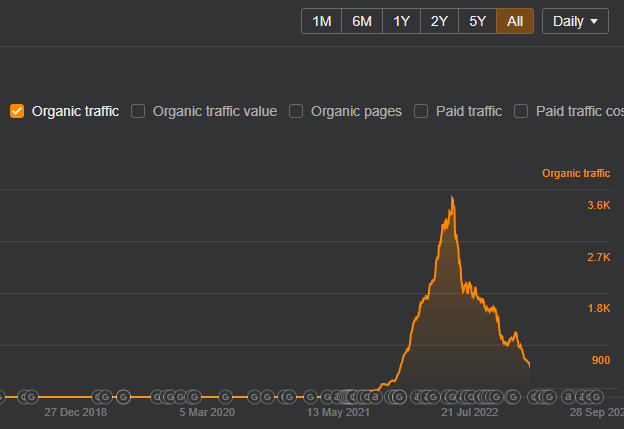
The metric that matters in 2025 and beyond is organic traffic — specifically, the traffic trend of the sites where your content will be placed. A site with a stable or growing traffic graph over the past six months is a real site with real readers. A site that showed 50,000 monthly visitors in January and 5,000 in March was likely hit by a Google core update, which means the content on it wasn’t good enough to survive.

Before agreeing to any placement, ask the agency to show you example sites from their publisher network. Then check those sites in Ahrefs or Semrush. Look for:
- Consistent organic traffic over at least six months
- A clean backlink profile without spammy outbound links
- Content that’s clearly written for a specific audience
- Real author names and bios (not “Admin” or “Guest Author”)
- No obvious “Submit a Guest Post” buttons in the main navigation
Sites that prominently advertise their willingness to accept guest posts are, almost by definition, sites that have lost editorial credibility. Real editorial sites do occasionally accept contributed content, but they don’t advertise it like a billboard.
2. Niche Relevance Is Non-Negotiable
A backlink from a high-traffic food blog means very little if you run a B2B SaaS company. Google evaluates link relevance as part of how it weights backlinks, and an agency that places your links on random sites — regardless of how impressive the metrics look — is not building topical authority for your domain.
A good agency will have a publisher network segmented by niche. They should be able to tell you, before you sign, which categories of sites they have access to and how they verify topical relevance. If their answer is vague or they suggest that any high-DA site is “relevant enough,” move on.
3. Content Quality Shapes Everything
The content placed alongside your link determines whether the Guest Posting Agency does anything useful. Thin, templated, or obviously AI-generated content doesn’t get shared, doesn’t attract secondary links, and increasingly doesn’t rank — which means the page hosting your link may accumulate no new authority over time.
Ask for writing samples before committing to any agency. The content should be:
- Written with a clear point of view and real depth
- Formatted for readability (headers, short paragraphs, useful examples)
- Free of generic filler and buzzwords
- Appropriate for the publication it’s targeting
Some agencies allow you to review and approve content before it’s submitted. That approval step is worth more than it sounds — it’s a signal that the agency respects editorial standards and isn’t mass-producing articles on a content mill.
4. The Outreach Process Determines Placement Quality
There’s a significant difference between an agency that manually outreaches to vetted websites and one that works from a pre-built list of sites that accept paid placements. The first approach is slower and more expensive. It also produces links that are meaningfully harder to get — which is exactly why they carry more weight.
Ask an agency directly: do they use a fixed publisher network, or do they conduct outreach for each campaign? There’s nothing inherently wrong with having established relationships with publishers — it can speed up placements. But if every single link comes from the same rotating list of sites, you’re buying inventory, not earning coverage.
Red flags in the outreach process include:
- Delivery times of under 48 hours (real outreach takes longer)
- Guarantees of placement on specific, named publications before outreach begins
- No mention of editorial review in the process
- Inability or unwillingness to share how they pitch
5. Transparent Reporting and Link Tracking
A trustworthy agency gives you full visibility into what you’re getting. That means a shared live dashboard or regular reporting that includes the URL of each placed post, the domain metrics at the time of placement, the anchor text used, and confirmation that the link is dofollow.
If an agency is evasive about reporting, or if reports arrive as vague PDFs with no verifiable URLs, treat it as a serious warning sign. You cannot evaluate what you cannot verify.
Some agencies also offer link guarantees — meaning if a placed link goes down within a set period (often 12 months), they’ll replace it. This kind of warranty reflects confidence in the quality of their publisher relationships and is worth asking about.
Comparison: Types of Guest Posting Agency
Understanding the different models helps set realistic expectations about price, quality, and turnaround time.
| Service Type | How It Works | Best For | Typical Cost Range |
|---|---|---|---|
| Managed Outreach Agency | Manual prospecting and pitching per campaign | Brands wanting editorial links at scale | $200–$600+ per link |
| Publisher Network / Marketplace | Pre-vetted sites available for placement | Agencies needing predictable supply | $100–$400 per placement |
| Freelance Outreach Specialists | Individual expert handling a specific niche | Boutique or specialized campaigns | $150–$500 per link |
| Low-Cost Bulk Services | Pre-built lists, templated content | Not recommended for real SEO goals | Under $80 per link |
Price alone isn’t a quality indicator, but it’s a signal. Guest Posting Agency priced under $50 almost always comes from link farms. Pricing in the $200–$500 range for a well-trafficked, niche-relevant site is realistic for quality work. Anything significantly higher should come with a demonstrably elite publisher — think major industry publications with editorial review teams.
Red Flags That Should End the Conversation
These aren’t minor concerns. Any one of these should make you walk away:
They guarantee specific rankings. No legitimate agency can guarantee rankings as a result of backlinks. Google’s algorithm is too complex, and too many other variables affect rank.
They refuse to show you sample sites. “Our network is private” is usually code for “our sites won’t survive your scrutiny.”
Their sites have a public “Write For Us” page in the main nav. Sites that openly advertise paid placements have often sold so many links that their editorial reputation is gone.
The turnaround time is suspiciously fast. A 24–48 hour turnaround means there’s no real outreach happening. The link is being placed on a site that accepts anything immediately, which is exactly what you don’t want.
They use DA as their only quality metric. Domain Authority can be inflated with cheap links. Organic traffic, traffic trends, and editorial standards are harder to fake.
Their outreach uses mass-templated emails. Editors receive hundreds of templated pitches and ignore all of them. An agency that relies on mass outreach produces placements on sites that accept anything — because those are the only sites that respond.
The sites have outbound links to gambling, adult, or pharmaceutical content unrelated to their stated niche. This is a classic signal of a private blog network or link farm.
Questions to Ask Before You Hire
Before signing any contract or paying a deposit, ask these questions directly:
- Can you show me ten live examples of recent placements, including the site URL and metrics at time of placement?
- How do you verify that a publisher site has real organic traffic?
- What’s your content creation process, and can I approve the article before submission?
- Do you offer a link replacement guarantee if a post is removed?
- How do you handle anchor text strategy to keep my link profile natural?
- What happens if you can’t place a link within the agreed timeframe?
- Do you work exclusively with editorial sites, or do you place links on sites that openly sell placements?
How an agency responds to these questions tells you more than their website ever will. Confident, specific answers signal a team that knows their craft. Vague deflections or obvious discomfort with transparency signal the opposite.
How to Evaluate an Agency’s Publisher Network
Even if an agency passes the initial conversation, do your own due diligence on their sites before committing to a full campaign.
Pick five to ten sites from their network and run them through an SEO tool. Check for:
- Traffic trend — Is the graph stable or growing? Any sudden drops likely indicate a penalty.
- Traffic source breakdown — Is most traffic organic, or is it dominated by direct or referral sources that could indicate bot traffic?
- Content quality — Read five recent articles. Are they well-written and original, or do they feel templated and thin?
- Backlink profile — Does the site’s own backlink profile look natural, or is it full of spammy links?
- Social presence — Does the site have an active social media following? Real editorial sites tend to have communities around them.
- Author attribution — Are articles written by real, named humans with linked profiles?
This process takes maybe 30 minutes per site, but it will save you from wasting a campaign budget on worthless placements.
Pricing Realities: What Quality Costs
Many businesses sticker-shock at the pricing of legitimate Guest Posting Agency. It’s worth understanding why quality costs what it costs.
Real outreach involves a researcher identifying potential publishers, a writer creating original content, an outreach specialist building a relationship with the editor, editorial review from the publisher, and coordination around publication and tracking. That’s four to six hours of skilled labor per placement, minimum.
At reasonable professional rates, a single quality guest post that goes through genuine outreach will cost $150 to $600+. If someone’s charging $30 per link, the math doesn’t allow for real labor — which means they’re not doing real outreach.
That said, price is not automatically a quality signal in the other direction. Some expensive agencies deliver mediocre results. The vetting process described above applies regardless of price point.
What a Healthy Guest Posting Agency Campaign Looks Like
A well-run campaign with a good agency should have the following characteristics over a three-to-six month window:
- A consistent monthly volume of placements (typically 4–12, depending on budget) rather than a single batch dump
- Anchor text diversity, including branded, partial-match, and naked URL anchors
- Placement spread across multiple domains, not the same five sites repeatedly
- Traffic from the placed posts (even small referral traffic is a sign of a real audience)
- Gradual, sustainable movement in your target keyword rankings
If you’re seeing fast, dramatic link volume with no improvement in rankings, or if your link profile looks suddenly unnatural, the campaign is doing damage regardless of what the reporting spreadsheet shows.
The Right Mindset Going In
The best Guest Posting Agency operate more like editorial partners than link vendors. They care about where your brand is associated, what the content says, and whether the placement actually makes sense for your growth goals.
Finding that kind of partner requires patience, due diligence, and a willingness to pay for genuine quality. It also requires knowing exactly what questions to ask, what metrics to ignore, and what signals — in both the pitch and the delivered work — reveal whether an agency is the real thing or a cleverly packaged shortcut.
FAQs: Choosing a Guest Posting Agency
Q: How long does it take to see results from the Guest Posting Agency?
SEO results from a Guest Posting Agency typically take three to six months to manifest in rankings. The timeline depends on the authority of the placing sites, the competitiveness of your target keywords, and the overall state of your backlink profile. Anyone promising faster results through links alone is overstating what’s possible.
Q: How many guest posts do I need per month?
For most mid-size websites, four to eight quality placements per month is a sustainable and effective pace. Volume matters less than quality and relevance. A single link from a high-authority, topically relevant publication can outperform a dozen links from marginal sites.
Q: Is it better to use an agency or do Guest Posting Agency in-house?
It depends on your team’s capacity and expertise. In-house outreach produces the best relationship-driven placements but requires dedicated time from someone who understands editorial pitching. Agencies are more efficient at scale, but require rigorous vetting. A hybrid approach — agency for volume, in-house for tier-one targets — often works best.
Q: What’s the difference between a guest posting agency and a link building agency?
Guest posting agencies specifically focus on earning links through contributed editorial content. Link-building agencies use a broader range of tactics, including digital PR, broken link building, niche edits, and more. A guest posting agency is one subset of link building. Some agencies do both; others specialize in one.
Q: Should I care about dofollow vs. nofollow links in guest posts?
Yes. The vast majority of the SEO value from a guest post comes from dofollow links. Some high-authority publications use nofollow by default, and a link from them may still carry brand value — but for pure link equity, you want dofollow. Confirm this with the agency before placement.
Q: What’s a realistic budget for a quality Guest Posting Agency?
For genuinely high-quality placements on sites with real traffic and editorial standards, expect to spend at least $150–$300 per link at the lower end and $400–$600+ for placements on more authoritative publications. Monthly budgets of $1,000–$3,000 are typical for meaningful campaigns.
Q: Can a Guest Posting Agency hurt my site?
Yes — if done through link farms, private blog networks, or sites with spammy link profiles. A low-quality guest posting agency can trigger manual actions from Google or simply waste budget with no positive effect. This is why vetting the agency’s publisher network is essential before committing.
